This checklist is built for mineral and landowners, along with small operators, who need a structured way to approach negotiations where six-figure bonus payments and decades-long land rights hang in the balance. Most owners only negotiate a lease once or twice in a lifetime. That inexperience is exactly why costly mistakes happen so often.
Below, we'll walk through a step-by-step checklist, the clauses that deserve the most scrutiny, common pitfalls to avoid, and when professional help earns its cost.
Key Takeaways
- Confirm the lessee's identity and your ownership interest before signing anything
- Settle bonus, royalty, and primary term before you open the lease document
- Royalty wording, surface protections, and pooling clauses hide the biggest long-term risks
- The first offer is rarely the best, especially where operators compete for leases
- A landman and attorney working together catch errors either one might miss alone
What Is an Oil and Gas Lease Negotiation?
An oil and gas lease negotiation is the process where a mineral or landowner (the lessor) and an energy company (the lessee) agree on terms granting exploration and production rights in exchange for compensation. The goal is a signed lease that fairly balances the landowner's payment and land protections against the company's need to operate efficiently.
A surface use agreement is a related but separate document. It governs use of the surface itself, covering roads, well pads, and pipelines, rather than the underlying mineral rights. Bundling the two together often shortchanges the landowner on surface protections.
The Oil and Gas Lease Negotiation Checklist: Step-by-Step
Following these steps in order matters. Negotiating lease language before agreeing on the deal terms that actually move the needle, like bonus and royalty, wastes time on details that won't matter if the core numbers fall apart.
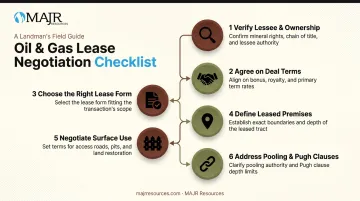
Step 1: Verify the Lessee and Ownership Interest
Confirm the actual company behind the lease, not just the landman who showed up at your door. Landmen represent the operator's interests, and the name on their business card isn't always the entity that will hold the lease.
- Check operator history through your state's regulatory agency, such as the Texas Railroad Commission
- Verify current well activity and lease status in the area
- Confirm your ownership percentage and net mineral acres, since this directly shapes your bargaining leverage
MAJR Resources' full-title landman and mineral rights verification services confirm accurate ownership records before negotiations begin, catching gaps in the chain of title, undisclosed heirs, or old liens that could derail a deal months later.
Step 2: Agree on Deal Terms First
Before touching a single line of lease language, settle these core numbers:
- Bonus payment: the upfront consideration for signing
- Primary term length: typically 3 years, though it can range from 1 to 5
- Royalty fraction: your production share, free of drilling costs
- Delay rental: payments that hold a traditional (non-paid-up) lease during the primary term
- Shut-in royalty: payment that keeps the lease alive if a well is capable of producing but isn't currently selling
Optional add-ons worth discussing include drilling commitments, pooling promises, or a bumped-up royalty after the well pays out its drilling costs.
Step 3: Choose the Right Lease Form
Whoever's lease form hits the table first sets the baseline for everything that follows. Most industry-standard forms are drafted to protect the lessee. Push for an attorney-reviewed form or an association-standard document instead of accepting the company's boilerplate as your starting point.
Step 4: Define the Leased Premises Precisely
Get a complete, accurate legal description. If you own non-contiguous tracts, insist on separate leases for each one rather than one blanket agreement. Also watch for Mother Hubbard clauses — broad "catch-all" language originally meant to fix minor survey errors, but which can expand the lease's coverage well beyond what you intended to sign away.
Step 5: Negotiate Surface Use and Access Protections
Surface damage compensation, road placement, well-pad siting, water use limits, and pipeline burial depth should all be spelled out separately from the mineral terms. A lessee generally has no automatic obligation to pay for reasonable surface use unless the lease says so in writing.
Step 6: Address Pooling, Pugh Clauses, and Continuous Operations
Pooling lets the operator combine your acreage with neighboring tracts into a single production unit, which can dilute your interest if left unchecked. A Pugh clause protects the acreage outside that pooled unit from being held indefinitely by production somewhere else on the lease.
Critical Lease Clauses to Negotiate Carefully
Beyond the checklist steps, a handful of specific clauses determine whether a lease actually protects you long-term.
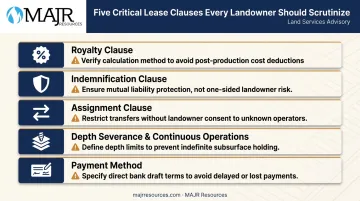
Royalty Clause. Push to limit or prohibit post-production cost deductions, meaning transportation, dehydration, and marketing fees, that operators subtract before calculating your royalty. Require royalty based on gross proceeds or market value rather than a net-back calculation.
Texas courts have shown that specific "gross value received" language can override standard "market value at the well" wording, so the exact phrasing matters.
Indemnification Clause. Require the operator to indemnify you against third-party claims tied to their drilling operations. Picture a scenario where a spill migrates onto a neighbor's property. Without indemnification language, you could get pulled into that liability even though you never operated the well.
Assignment Clause. Demand notice any time the lease gets assigned to another company, and keep the original lessee jointly liable even after a sale. Leases change hands often in this industry.
Depth Severance and Continuous Operations. Require release of any undeveloped depths or acreage once the primary term ends, so your land isn't tied up indefinitely for formations the operator has no active plans to develop.
Payment Method. Bank drafts aren't cash. A sight draft can give the lessee up to 30 banking days to honor or reject payment. Insist on a check, preferably a cashier's check, and confirm receipt of the bonus before handing over the signed lease.
According to the Texas Land and Mineral Owners Association's negotiation checklist, most standard industry forms are drafted with the lessee's interests in mind. That's exactly why every clause above deserves a second look before signing.
Going rates vary widely by region and competition. New Mexico's State Land Office 2025 lease auction offered royalty rates between 20% and 25%, with 14 leases generating more than $56 million in bonus payments. Public auction figures like these don't translate directly to private-tract deals, but they illustrate just how much local activity can move the numbers.
Common Mistakes and Misconceptions When Negotiating a Lease
Even experienced mineral owners fall into these traps during negotiations:
- Assuming the first offer is the best offer: Bonus and royalty rates are almost always negotiable, especially when multiple companies compete for acreage in the same play.
- Believing the landman has full authority to change terms: Landmen typically work within limits set by their company, and someone above them can often approve better terms — a flat "no" isn't always the final word.
- Treating surface use as an afterthought: Surface protections deserve their own negotiated agreement, not a rushed paragraph bundled into the mineral lease.
When to Bring in a Professional Landman or Attorney
A landman independently verifies mineral ownership, researches title history, and flags potential problems before you sign anything. MAJR Resources provides this core service for owners and operators alike, covering chain-of-title research, undisclosed heirs, and unresolved liens that could cloud your title later.
Signs it's time to bring in a landman or attorney include:
- Multiple heirs or unclear ownership across the mineral tract
- Title history spanning decades or several ownership transfers
- Complex indemnification, liability, or multi-party lease terms
- Liens, judgments, or unresolved claims threatening the title
- Potential disputes over royalties or boundary lines
An attorney adds a different kind of value: reviewing indemnification language, liability exposure, and whether your negotiated clauses will actually hold up in court. Landman research establishes the facts. Legal review turns those facts into enforceable protection.
Combining both is the most common approach among experienced mineral owners avoiding costly title errors or royalty disputes. MAJR Resources, with two decades of leasing and title experience, helps guide this process for owners and energy companies pursuing leases of any size across Texas and beyond.
Frequently Asked Questions
Can you negotiate an oil and gas lease?
Yes, nearly every term is negotiable. Your bargaining power depends on ownership size, your tract's location, and how many companies are competing for leases in your area.
What is the going rate for oil and gas leases?
Bonus and royalty rates vary significantly by region and drilling activity. Research recent comparable leases nearby or consult a landman for current local rates.
How long is a typical oil and gas lease?
Primary terms usually run 3 to 5 years, with 3 years common in many regions. The lease extends automatically once production begins.
Do I need an attorney or landman to negotiate a lease?
It's not legally required, but professional support helps identify unfavorable clauses and verify title, particularly for larger or higher-value tracts. Firms like MAJR Resources specialize in chain-of-title verification and mineral rights research to catch these issues early.
What is a Pugh clause and why does it matter?
A Pugh clause prevents production from a small pooled unit from holding your entire leased acreage under lease indefinitely. Without it, one small producing well could tie up land you never intended to keep leased.
Can lease terms be renegotiated after signing?
Generally, no. Once signed, a lease is binding for its stated term, so negotiate terms and complete legal review before you sign.