Introduction
If you own rural acreage in Texas, there's a decent chance a solar developer has already called, mailed, or knocked on your door. Renewable energy expansion is accelerating across the state, and land agents are actively scouting parcels near substations and transmission corridors.
That interest translates into real dollars. A solar lease can mean guaranteed income for 20 to 30 years or more, paid whether crop prices crash or drought hits. But not every parcel qualifies, and not every contract is written in the landowner's favor.
This guide walks through how developers evaluate your land, the exact leasing process from first contact to signature, and what actually drives your per-acre rate. It also covers the mistakes that cost landowners real money over a multi-decade term.
Key Takeaways
- Solar leases typically run 20-40 years, with renewals extending control even longer.
- Land suitability depends on flat, buildable acreage near substations and transmission lines.
- Rates vary based on state incentives, grid access, and negotiated escalation clauses.
- Never sign a multi-decade agreement without independent legal, tax, and title review.
- Rollback taxes, mineral rights conflicts, and decommissioning gaps are the most overlooked risks.
How to Lease Land for a Solar Farm: Step-by-Step Process
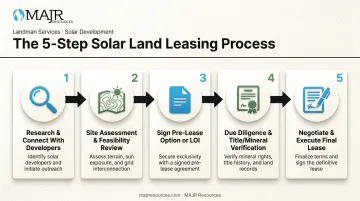
Step 1: Research and Connect With Solar Developers
Many landowners are approached directly by a developer's land agent. Don't stop there. Multiple developers are usually active in any given region, and offers differ substantially on rate, term length, and contract flexibility.
Before engaging seriously with any company:
- Request references from landowners currently under lease with that developer
- Ask specifically about payment reliability and how well the developer maintains the land
- Compare at least two or three offers before committing to exclusivity
Step 2: Site Assessment and Feasibility Review
Once a developer expresses interest, they'll run a feasibility study covering acreage, topography, grid proximity, and environmental constraints like floodplains or wetlands.
Ask for a copy of these findings. Clarify what data sources they used, such as satellite imagery, county GIS records, or an on-site survey. A developer unwilling to share this data is a yellow flag worth noting.
Step 3: Sign a Pre-Lease Agreement (Option or Letter of Intent)
Most deals start with an option period or letter of intent (LOI), not a binding lease. This gives the developer time to finalize project scope, secure interconnection approval, and confirm financing, typically 2 to 5 years, according to Penn State Extension's landowner guide to utility-scale solar leasing.
Even though it's non-binding, have an attorney review the option agreement. It sets the framework, including price, acreage, and exclusivity terms, for everything that follows.
Step 4: Complete Due Diligence and Title/Mineral Rights Verification
This is where most Texas deals get complicated. Surface and mineral estates are frequently severed here, meaning the person who owns the surface may not own what's underneath it, and vice versa.
Before finalizing terms, confirm:
- Clear surface title, free of undisclosed liens or competing claims
- Mineral ownership status, including whether rights were severed decades ago through an old deed reservation
- Existing oil and gas leases that may still be active or improperly released
Professional landman and title verification services (the kind MAJR Resources has provided across Texas oil and gas transactions for two decades) help landowners spot these conflicts before they derail a signed deal.
Step 5: Negotiate and Execute the Final Lease
The final contract is where you protect long-term value. Push for:
- Rent escalation clauses tied to a fixed annual percentage, not left open-ended
- Decommissioning bonds that guarantee funds exist to remove equipment when the lease ends
- Indemnification protections shielding you from liability tied to construction or operation
Have independent legal and tax counsel review the complete document before signing. A 25-year commitment deserves more scrutiny than a quick read-through.
Does Your Land Qualify? Key Suitability Factors Solar Developers Look For
Not every offer that lands in your mailbox turns into a real deal. Developers screen parcels against a specific checklist before they invest time in negotiation.
Acreage and Buildable Land
The USDA's Economic Research Service uses a planning estimate of roughly 7.5 acres per megawatt, according to its report on utility-scale solar and wind development. The broader documented range spans 5.5 to 9.4 acres per megawatt, depending on technology and site layout. Utility-scale projects generally need at least 25 buildable acres; community solar can work with smaller parcels, sometimes under 10 acres.
Land Condition and Topography
Flat, clear land with minimal slope and limited tree cover is what developers prefer. Wetland overlap or floodplain exposure often triggers additional environmental review, and heavy tree cover means costly clearing before construction can even begin.
Proximity to Grid Infrastructure
Distance to substations and transmission lines matters more than almost anything else on this list. Interconnection feasibility also depends on available hosting capacity at the nearest feeder, not distance alone — a close substation with no spare capacity won't help you.
Local Zoning and State Incentive Support
Check your county's zoning ordinances and setback requirements before assuming approval is automatic. Local governments retain significant authority over solar siting, and state-level incentive programs shift over time, so verify current program status rather than assuming it still applies.
Existing Land Use and Mineral Rights Status
Active agricultural leases, existing easements, or severed mineral rights can all delay or complicate a solar agreement. If a neighbor's mineral lease overlaps your surface acreage, that needs resolution before a developer will move forward.
A landman services provider, such as MAJR Resources, can run chain-of-title research and verify mineral rights ownership early, catching conflicts before they stall a developer's due diligence.
What Determines Your Solar Lease Rate and Contract Terms
Land quality gets you noticed. Contract structure and market conditions determine what you actually get paid.
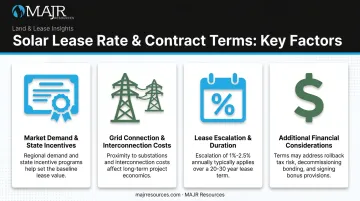
Market Demand, State Incentives, and Grid Connection Costs
State renewable portfolio standards, tax credits, and renewable energy certificate programs shape how much a developer can afford to offer. These programs change: Texas's REC program, for example, is being phased out, so don't assume today's incentive landscape will hold for the full lease term.
Interconnection capacity matters just as much. A parcel requiring expensive line upgrades or a new substation build-out will typically see a lower offer than one with easy, low-cost access to existing infrastructure.
Lease Structure, Escalation, and Duration Terms
Rent is normally paid as an annual dollar amount per leased acre, with escalation clauses commonly ranging from 1% to 2.5% annually, per Penn State's utility-scale solar leasing guide. Over a 25-year term, that difference adds up fast, so model it out before accepting a flat-rate offer.
Standard terms run 20 to 30 years, according to Texas A&M AgriLife's solar lease considerations for landowners, sometimes stretching further with renewal options. That's multiple decades of restricted control over how you use the property, so factor it into estate planning and future land-use goals.
Additional Financial Considerations
- Agricultural tax rollback risk: Changing land use from open-space agricultural to commercial can trigger rollback tax on the prior three years, plus 5% annual interest
- Decommissioning bonding: Texas requires financial assurance for facility removal, with evidence due by the 20th anniversary of commercial operations at the latest
- Payment structure: Some deals include a signing bonus on top of annual rent, distinct from the option-period payment
Common Mistakes and Red Flags to Avoid When Leasing Land for Solar
Most landowner regrets trace back to a handful of avoidable errors:
- Skipping independent legal and tax review before signing a decades-long contract — the developer's attorney works for the developer, not you
- Failing to confirm decommissioning responsibility in writing, including who pays if the developer goes out of business mid-term
- Overlooking agricultural tax rollback penalties, which can wipe out several years of lease income in a single tax bill
- Ignoring the developer's track record through references from landowners already under contract with them
Each of these is fixable at the negotiation stage. None of them are fixable after signature.
Protecting Your Interests: Why Expert Land and Title Support Matters
Solar leases share more with oil and gas leases than most landowners expect. Both require rigorous title research, and both hinge on knowing exactly who owns what beneath the surface.
Texas has a long history of mineral severance. A parcel's surface owner and mineral owner are frequently different people, sometimes different families entirely, separated by decades of inherited or sold mineral interests.
Because Texas courts have generally treated the mineral estate as dominant over the surface, an active mineral lease or drilling right can directly conflict with a solar array already under construction.
MAJR Resources has spent over 20 years untangling exactly this kind of title complexity across the Permian Basin and beyond. That expertise, including chain-of-title construction, mineral severance analysis, and encumbrance identification, applies directly to solar land agreements, not just traditional oil and gas leasing.
Before committing surface rights for 25 years, it's worth having someone confirm:
- Whether mineral rights were severed, and by whom
- The status of any existing oil and gas lease, still active or improperly released
- Ambiguous language in old deeds that could cloud your title later
Thorough due diligence protects the income you're counting on for the next two decades, catching disputes before they can interrupt your payments.

Frequently Asked Questions
Solar land leases can generate substantial, predictable income for decades, but only if your land qualifies, the contract terms are fair, and you verify mineral and title ownership before signing.
What is a solar lease?
A solar lease is a long-term agreement where a developer pays a landowner to install and operate solar panels on their property. The landowner retains ownership but grants surface control for the lease term.
What's the minimum acreage for a solar farm?
Utility-scale projects generally require at least 25 buildable acres, based on roughly 7.5 acres per megawatt of capacity. Community solar projects can sometimes work with smaller parcels, depending on the state program.
Is it worth it to buy out a solar lease?
Buyout value depends on the remaining lease term, projected income, and current market lease rates. Always evaluate this decision with financial and legal counsel before acting.
How much can I earn per acre leasing my land for solar?
Per-acre rates vary widely by state incentives, grid proximity, and local market demand. There's no reliable national benchmark: get a site-specific assessment from an active developer in your region.
What happens to my mineral rights if I lease my land for solar?
Solar leases typically cover surface rights only, not mineral ownership. Verifying mineral rights status before signing is essential to avoid future conflicts with drilling or extraction activity.
How long does a solar land lease typically last?
Standard terms run 20 to 30 years, often with renewal options that can extend control well beyond that. This duration should factor heavily into any long-term land or estate planning.