Get the acquisition wrong, and a project stalls before it starts. Get the disposition wrong, and money gets left on the table or liability follows you long after closing. The terms "acquisitions" and "dispositions" get thrown around loosely in this industry, but confusing the two — or mismanaging either — is an expensive mistake.
This guide breaks down what acquisitions and dispositions actually mean in a land and mineral rights context, how each process works step by step, and why specialized landman expertise matters more than most companies realize until they're stuck without it.
Key Takeaways
- Acquisitions secure land, mineral, or easement rights; dispositions transfer them
- Both processes require thorough due diligence and skilled negotiation
- Energy acquisitions differ from residential ones because of split surface/mineral rights
- An experienced landman partner reduces risk and keeps multi-state projects on schedule
What Are Real Estate Acquisitions and Dispositions?
In general real estate terms, an acquisition means gaining ownership or control of property. In the energy and infrastructure world, that definition narrows considerably. It typically means acquiring:
- Surface rights for well pads, access roads, or facility construction
- Mineral rights beneath the surface
- Leasehold interests granting exploration and production rights
- Easements or rights-of-way for pipelines, transmission lines, or renewable installations
A disposition is the mirror image — selling, assigning, or relinquishing land or mineral interests once a lease term ends, a project wraps up, or a company decides to rebalance its portfolio.
Here's the part people miss: acquisition and disposition aren't separate businesses. They're two ends of the same asset lifecycle.
A single mineral tract might get leased during an exploration phase, held through years of production, and then divested once the well stops being economical or the operator shifts focus to a different basin. The same parcel, the same ownership chain, moves through both phases over time.
Types of Assets Involved in Energy & Infrastructure Acquisitions
Energy acquisitions cover a wider range of interests than a typical real estate closing:
- Fee simple land purchases — full ownership of surface and subsurface
- Mineral rights — ownership of subsurface resources, often severed from surface title
- Working interests — the right to explore, drill, and produce, carrying a share of operating costs
- Surface use agreements — negotiated terms for drilling access, compensation, and restoration
- Rights-of-way and easements — corridors for pipelines, transmission lines, or wind and solar infrastructure
Why This Differs from Traditional Real Estate
A residential closing rarely involves wondering who owns what's underneath the house. Energy transactions do, constantly. This is called a split estate — where surface rights and subsurface mineral rights belong to different owners, and mineral rights often take precedence under BLM guidance.
That split forces specialized chain-of-title research tracing ownership back through generations, plus compliance across overlapping jurisdictions. A pipeline project, for instance, might need sign-off from the Federal Energy Regulatory Commission for interstate routing, a state land board for state-owned tracts, and county-level recording for the deeds themselves.
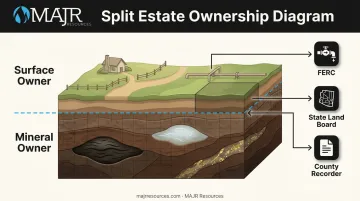
MAJR Resources handles this exact coordination for Permian Basin clients: tracing ownership through generations of records and clearing every jurisdictional hurdle before a project moves forward.
The Acquisitions Process: From Lead Sourcing to Closing
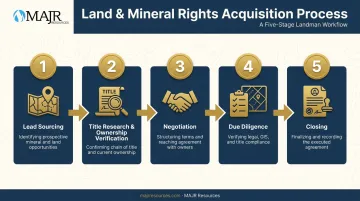
Acquiring land or mineral rights for an energy project follows a fairly predictable sequence, though each step carries real risk if rushed.
1. Lead sourcing. The process starts by identifying landowners, mineral owners, or parcels that fall within a project's footprint or exploration area. This might mean mapping an entire county against known mineral ownership records to figure out who to approach first.
2. Title research and ownership verification. This is the step that makes or breaks everything downstream. Landmen trace ownership from the current holder back to the original government land grant or patent, reviewing:
- Property deeds and historical transfers
- Wills and probate records
- Tax assessments and liens
- Existing leases and court records
- Plat maps confirming boundaries
Mineral rights complicate this further since they're frequently severed from surface ownership, sometimes divided among dozens of heirs across decades.
3. Negotiation. Once ownership is confirmed, the real work begins: securing leases, easements, or purchase agreements at terms that protect the client's operational and financial interests, not just the seller's.
4. Due diligence beyond title. Title clearance isn't the finish line. Environmental checks, lien searches, and GIS mapping all need to happen before an offer becomes a closing. GIS technology in particular helps confirm that legal descriptions in a deed actually match the physical boundaries on the ground. A mismatch here can trigger boundary disputes years later.
5. Closing. Final documentation gets prepared and recorded in compliance with state and county requirements, so ownership or leasehold rights transfer without gaps.
Why this matters: Industry commentary consistently points to title defects and ownership disputes as the leading cause of delayed spud dates and construction slippage, though no single universal benchmark exists for how much time this adds.
What is documented is federal process: assignments of record title or operating rights must be filed with the BLM within 90 days of the transferor's signature. Miss that window, and compliance headaches follow on top of everything else.
This is exactly where a firm like MAJR Resources earns its keep. Their landmen cross-reference wills, probate filings, tax records, and private contracts alongside standard deed searches, flagging gaps or defects before they become deal-breakers. When ownership can't be readily confirmed (missing heirs, estranged family members, unrecorded transfers), they run dedicated heirship and people-finding investigations rather than letting the deal stall.
The Dispositions Process: Divesting Land, Leases & Mineral Interests
Dispositions typically stem from a handful of common scenarios:
- Lease expiration — the primary term runs out with no qualifying production or drilling activity
- Project completion — a well or field reaches the end of its economic life
- Non-core asset monetization — a company decides certain holdings no longer fit its strategy
- Portfolio rebalancing — capital shifts toward higher-priority basins
That last trigger is increasingly common. Apache Corp (APA) recently announced plans to divest non-core Permian assets for $950 million, a pattern echoed across the industry as operators high-grade their portfolios toward their most productive acreage.
Valuation and Buyer Identification
Before marketing anything, the current market value of the mineral, surface, or leasehold interest needs an honest assessment that factors in production history, remaining reserves, and comparable regional sales. From there, the seller identifies qualified purchasers:
- Other operators consolidating acreage
- Investment funds and mineral royalty buyers
- Individual landowners or heirs
Negotiation and Closing Considerations
Disposition negotiations carry their own wrinkles that acquisitions don't:
- Retained royalty interests — sellers may keep a royalty stake even after transferring operating rights
- Liability transfer — who's responsible for plugging obligations or environmental remediation post-sale
- Post-sale obligations — surviving covenants, indemnification terms, or continuing compliance duties
Closing a disposition means filing releases, recording deed or assignment documents, and submitting any required regulatory notifications, mirroring the acquisition closing process in reverse. MAJR Resources supports sellers through this documentation trail, verifying chain of title accuracy and coordinating with buyers' counsel to keep the transfer on schedule.
Acquisitions vs. Dispositions: Key Differences
The confusion between these two terms usually comes down to direction: acquisition means gaining rights, while disposition means giving them up. Simple enough in theory, but the practical differences run deeper.
| Factor | Acquisitions | Dispositions |
|---|---|---|
| Direction | Gaining ownership or control | Selling, assigning, or relinquishing |
| Lifecycle stage | Exploration, development, pre-construction | Post-production, lease expiration, divestment |
| Primary risk | Title and ownership verification | Valuation accuracy and liability transfer |
| Key documents | Deeds, leases, purchase agreements | Releases, assignments, deed filings |
Notice the risk profile flips entirely. An acquisition can fall apart because a title defect surfaces late, while a disposition can stall when the seller underprices the asset or fails to properly transfer plugging liability to the buyer.
Why Partner with a Professional Landman & Acquisitions Team
Multi-state acquisitions and dispositions demand expertise most in-house teams simply don't have bandwidth to maintain. A landman working a Permian Basin mineral tract needs different regulatory fluency than one working Marcellus Shale acreage in Pennsylvania. State statutes, local ordinances, and environmental thresholds shift from one basin to the next.
That regulatory complexity is exactly why proactive title clearance changes the entire risk calculation. When ownership gets verified rigorously before capital gets committed, companies move with confidence instead of hoping nothing surfaces after closing.
This is where MAJR Resources has built its practice. Founded in 2005 in Monahans, Texas, the company has spent over two decades handling oil and gas leasing and mineral rights verification. As the energy sector has diversified, that expertise now extends to renewable energy and infrastructure land acquisitions and dispositions.
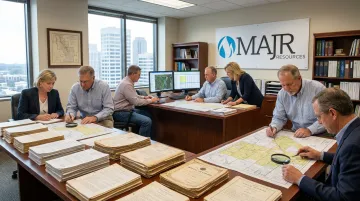
Their approach combines:
- Deep title research: chain of title tracing back to original land grants, cross-referenced against wills, probate, tax, and court records
- GIS-integrated mapping: confirming legal descriptions match physical boundaries before anyone commits capital
- Investigative services: locating missing heirs and resolving ownership gaps that would otherwise stall a deal indefinitely
- Multi-jurisdictional coverage: documented service across Texas, North Dakota, Oklahoma, New Mexico, Louisiana, Pennsylvania, Ohio, and beyond
For companies juggling acquisitions in one state and dispositions in another simultaneously, that kind of consistency matters more than most people appreciate until they're managing three different sets of county requirements at once.
Frequently Asked Questions
What is a property acquisition?
A property acquisition is the process of gaining ownership, leasehold, or usage rights over real estate or mineral and surface interests. It typically involves title research and negotiation, followed by legal documentation that transfers those rights cleanly.
What is the difference between acquisition and disposition?
Acquisition means gaining ownership or rights to a property or mineral interest. Disposition means selling, assigning, or relinquishing those same rights once they're no longer needed or strategically valuable.
How long does a typical land or mineral rights acquisition take to close?
Timelines vary widely based on title complexity and the number of owners involved. Thorough title research — especially when heirs or probate issues are involved — is typically what most affects the schedule.
Why is title verification so important in energy land acquisitions?
Unclear or disputed titles can halt drilling, construction, or invalidate a lease entirely. Verifying ownership upfront avoids downstream legal disputes and financial exposure that are far costlier to fix after closing.
What triggers a company to dispose of land or mineral interests?
Common triggers include lease expiration and project completion, alongside strategic decisions to monetize non-core assets in favor of higher-priority acreage. Portfolio rebalancing across basins is increasingly common industry-wide.
Can one company manage both acquisitions and dispositions across multiple states?
Yes. Experienced landman firms like MAJR Resources, with multi-state capabilities, can manage both processes simultaneously, applying consistent title standards and regulatory knowledge across a company's entire portfolio.