This guide is written for landowners, heirs, royalty owners, non-executive mineral owners, and E&P companies across Texas and the broader U.S. who encounter ratification requests during a lease's lifecycle. Ratification carries real legal and financial weight, yet it's one of the most misunderstood documents in oil and gas.
Below, we cover what ratification actually means, why companies request it, how the process unfolds, what to check before signing, and situations where signing may not serve your interests at all.
Key Takeaways
- Ratification binds a new owner or secures pooling consent without drafting a new lease
- Non-executive owners and NPRI holders must separately consent to pooling, typically via ratification
- Texas's Hahn v. ConocoPhillips (2024) ruling confirmed ratification alone can't convert a fixed NPRI into a floating one
- Signing isn't mandatory — verify bonus entitlement, acreage, and well status first
- A landman can confirm ownership and lease terms before you sign anything
What Is Oil and Gas Lease Ratification?
Ratification is the legal act of a landowner, heir, or mineral and royalty owner formally agreeing to be bound by an existing lease's terms, with or without modifications. Rather than creating a new agreement, it confirms one that already exists.
The purpose is practical. Lessees need a way to keep production or pooling moving forward without renegotiating a brand-new lease every time ownership changes through death, sale, or subdivision of land. Ratification fills that gap.
In plain terms, a ratification is your signature confirming you're bound by a lease someone else originally signed. Unlike executing a fresh lease, ratification typically doesn't involve negotiating a new bonus payment; you're stepping into rights and obligations already established by the original agreement.
Ratification vs. an Addendum
These two documents get confused constantly, but they serve different functions:
- An addendum modifies specific terms of a lease between the original contracting parties, serving as an edit to the existing deal.
- Ratification binds a new party (an heir, buyer, or previously unconsenting royalty owner) to a lease that already exists.
When Ratification Requests Typically Show Up
Common triggers include:
- Land that's been subdivided or sold since the original lease was signed
- Mineral interests passed down through inheritance
- Non-executive or royalty owners whose consent is needed for pooling but wasn't obtained originally
None of this is routine paperwork. A ratification is a legally binding document that affects how royalties are calculated and whether the lease remains enforceable against your interest. Treat it accordingly.
Why Do Oil and Gas Companies Request Lease Ratification?
The biggest driver in Texas comes down to one rule: an executive right holder can lease minerals but cannot unilaterally grant pooling rights over non-executive or royalty interests. If the lessor's authority didn't extend to pooling your specific interest, the company needs your separate consent, and ratification is how they get it.
Even leases that already contain pooling language don't automatically bind an NPRI or non-executive owner whose executive lacked that authority in the first place, according to research on ratification of oil and gas leases by royalty interests in Texas.
Beyond pooling consent, companies request ratification for several other reasons:
- Concern that a lack of production could give the lessor grounds to argue the lease terminated
- A need to add pooling or unitization language that was absent from the original lease
- Resolving shallow or deep rights restrictions that limit which formations the lease covers
- Enabling assignment of the lease to another operator
What Hahn v. ConocoPhillips Reveals About the Stakes
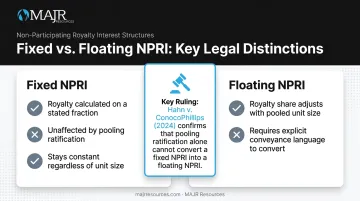
The Texas Supreme Court's ConocoPhillips Co. v. Hahn decision, decided December 31, 2024, is a real-world illustration of why the fine print matters. Hahn had reserved a fixed 1/8 non-participating royalty interest (NPRI) when he conveyed a tract of land. Years later, he signed a lease ratification, including its pooling provisions.
The Court held that ratifying the lease's pooling clause did not convert Hahn's fixed NPRI into a floating royalty. A separate document, the Stipulation of Interest, actually changed his interest because it contained distinct conveyance language. The lesson: ratification confirms what's already there. It doesn't silently rewrite your royalty structure unless the document explicitly does so.
Ratification Requests Signal Value
Here's a detail worth internalizing: if a company is asking you to ratify, your mineral rights matter to them. That request itself is negotiating leverage. Companies don't chase down ratification signatures for tracts with no production potential.
That said, not every request is adversarial. Many are routine administrative follow-ups after an inheritance or a property sale, with the company simply updating its records to reflect who now holds the interest.
Tracing successor owners across multiple heirs, verifying title chains, and managing these requests efficiently is exactly the kind of work landman firms like MAJR Resources handle for energy companies operating across the Permian Basin and beyond.
How the Lease Ratification Process Works
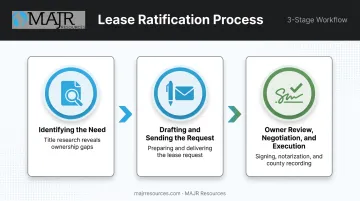
At a high level, ratification moves through three stages: a triggering event (ownership change or a lease-provision gap), owner review, and execution followed by county recording. When a mineral estate passes to several heirs, the lessee has to track down and secure each interest holder's signature individually — which is often the slowest part of the process.
Step 1: Identifying the Need for Ratification
Lessees or their landmen typically uncover the need through routine title research. This might surface a change in ownership that hasn't been reflected in company records. It could also reveal that the original lease is missing pooling or unitization language needed before drilling or forming a pooled unit.
In multi-heir situations, this can mean chasing down signatures from a half-dozen or more owners scattered across several states. Landmen, including firms like MAJR Resources, typically handle this outreach so operators can stay focused on production.
Step 2: Drafting and Sending the Ratification Request
Once the gap is identified, the company or its landman prepares a ratification document. It references the original lease's terms and requests the new owner's signature and notarization.
A solid ratification document should clearly state:
- Which lease it's confirming
- The property description
- Exactly what the signer is agreeing to
Step 3: Owner Review, Negotiation, and Execution
This is where you, as the owner, have real influence. Review the request carefully. Negotiate changes if warranted; you're not obligated to accept the document as drafted. Once satisfied, sign and notarize it before returning it to the requesting party.
After execution, the ratification gets recorded in the county's real property records. That recording is what formally binds the new party and allows continued production or pooling to proceed under the lease.
What to Review Before Signing a Ratification
Before you sign anything, figure out why ratification is being requested. Is it a lack of production, a missing pooling clause, or a pending lease assignment? The reason shapes what you should be negotiating for.
Key items to check:
- Acreage covered: does the lease describe only land you actually hold an interest in, or does it include additional acreage where you have no ownership stake?
- Well or unit status: is there already a producing well or a formed pooled unit on the tract?
- Bonus payment: confirm you received your fair share of the original lease bonus — this right exists independent of ratification, so signing isn't a prerequisite to getting paid.
A ratification request doesn't obligate you to sign immediately. There's often room to negotiate terms, and declining to sign at all is a legitimate option depending on your situation.
Verifying these details typically requires digging into county deed records, probate filings, and Railroad Commission well data. That kind of research goes beyond what most individual owners have time for.
This is where a professional landman or title research service pays off. MAJR Resources, for example, builds mineral ownership reports and traces chains of title to confirm the signer's ownership is legitimate and the lease terms are accurate, catching any ratification that would dilute or underpay that interest before it gets signed.
Common Misconceptions and When Ratification May Not Be Necessary
Misconception 1: You Must Ratify to Receive Your Bonus
Not true. Bonus entitlement for a non-executive mineral owner exists independently of any pooling ratification. If a company withholds your bonus pending a signature, push back on it directly, per analysis of lease ratification practices.
Misconception 2: Ratifying Automatically Changes Your Royalty Calculation
As Hahn made clear, ratifying a lease's pooling provisions doesn't automatically convert a fixed NPRI into a floating one. That only happens if the lease language explicitly says so.
Misconception 3: Ratification Can Revive an Expired Lease
Ratification presumes an existing, still-binding lease. If you're asked to ratify a lease that already expired without production, the underlying leasehold estate may have already terminated on its own terms. Don't sign anything — talk to an oil and gas attorney first to confirm the lease's actual status.
Frequently Asked Questions
What is a ratification of an oil and gas lease?
Ratification is a landowner or interest holder's formal agreement to be bound by an existing lease's terms. Companies request it most often when ownership has changed or when pooling consent is needed from a non-executive or royalty owner.
What happens when an oil and gas lease expires?
An expired lease without production generally terminates the lessee's rights automatically under the lease's own terms. Ratification cannot revive an already-expired lease — a new agreement would be required instead.
What is the addendum to the oil and gas lease?
An addendum modifies specific terms of a lease between the original contracting parties. Ratification, by contrast, binds a new party, such as an heir or buyer, to a lease that already exists.
Do I have to sign a lease ratification?
No, ratification is voluntary. You can negotiate specific terms or decline altogether, though declining may affect your ability to participate in future pooled production from that tract.
Can a non-executive mineral owner refuse to ratify a lease?
Yes. Non-executive owners can decline, but doing so may mean forfeiting participation in a pooled unit's production unless they separately consent later on different terms.
How does ratification affect royalty payments?
Ratification generally preserves your existing royalty terms as written in the original lease. Per Hahn v. ConocoPhillips, it does not convert a fixed NPRI into a floating one unless the lease explicitly states otherwise.